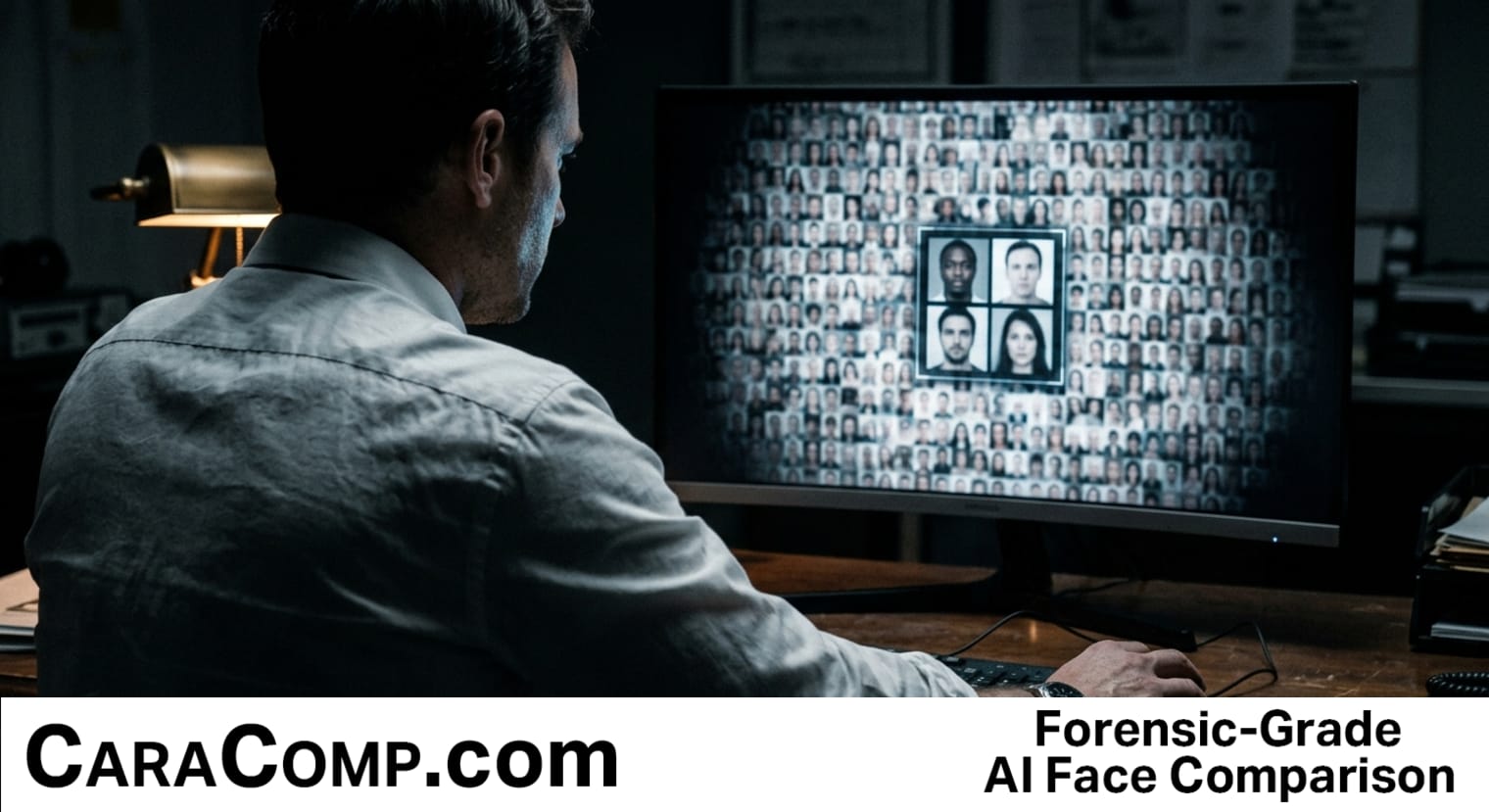
One Frame Fools You. Three Frames Catch the Deepfake.

The technical shift from visual inspection to frame consistency
The biggest technical shift for digital investigators in 2025 isn't the rise of higher-resolution deepfakes, but the total collapse of single-frame reliability. For years, the industry relied on spotting pixel-level artifacts—blurring around the mouth or unnatural skin textures. Modern generative adversarial networks (GANs) have largely solved these texture issues. The new forensic frontier is temporal and geometric consistency. If you are not analyzing how an identity holds up across a sequence of images or frames, you are not performing a valid verification; you are simply guessing.
Beyond Pixel Peeping: The Math of Identity Drift
The core technical challenge for generative models is not rendering a realistic face, but maintaining consistent Euclidean distance between facial landmarks as the subject moves. When a model performs a face swap or generates a synthetic persona, it must resolve a conflict between the source motion and the target anatomy. This often results in identity leakage or drift.
In a single frontal shot, the proportions might look perfect. However, when you perform a comparison across three frames at different angles, the jaw-to-temple ratios or the distance between the lateral canthus of the eyes often shift by measurable margins. This is a mathematical necessity of current architectures that fail to map 2D textures onto 3D biomechanical structures with 100% fidelity. For investigators, this means the single-image inspection is dead. We must move toward batch analysis where we compare multiple frames to find the geometric seams that the models cannot yet hide.
The Ear as a Static Forensic Anchor
One of the most significant insights for investigators is the role of secondary biometric anchors like the ear. While deepfake developers optimize for eyes and mouth movements to deceive human observers, the ear remains a relatively neglected region in training datasets. Because the ear structure is static and governed by rigid cartilage rather than expressive muscle, it serves as a perfect baseline for cross-frame analysis.
Research from computer vision labs suggests that while the face might look convincing, the ear geometry often fails to track correctly during head rotations. If the ear fold structure or attachment point morphs even slightly across a three-frame sequence, the integrity of the entire identity profile is compromised. This is why multi-frame comparison is superior to any single-image tool. By leveraging batch processing, investigators can identify these inconsistencies that the human eye would miss in a real-time video or a single high-resolution photo.
Bridging the Enterprise Tech Gap
Historically, the ability to perform high-precision facial comparison across multiple frames was locked behind enterprise contracts and six-figure government budgets. Solo private investigators and OSINT researchers were left with unreliable consumer tools or manual, hour-long side-by-side comparisons.
The industry is now seeing a democratization of this technology. We are moving away from the need for complex APIs and toward accessible software that performs enterprise-grade Euclidean distance analysis for a fraction of the cost—roughly 1/23rd of what big agencies pay. This allows small firms to generate court-ready reports based on batch comparisons, ensuring that their evidence stands up to the scrutiny of modern digital forensics. With 15% of applicants on some platforms already using deepfakes for identity verification, having the same tech caliber as federal agencies is no longer a luxury; it is a requirement for survival.
As generative models begin to incorporate 3D-aware architectures to fix these temporal drifts, will the next generation of detection need to move beyond geometry and into the realm of physiological signals like blood flow and micro-tremors?