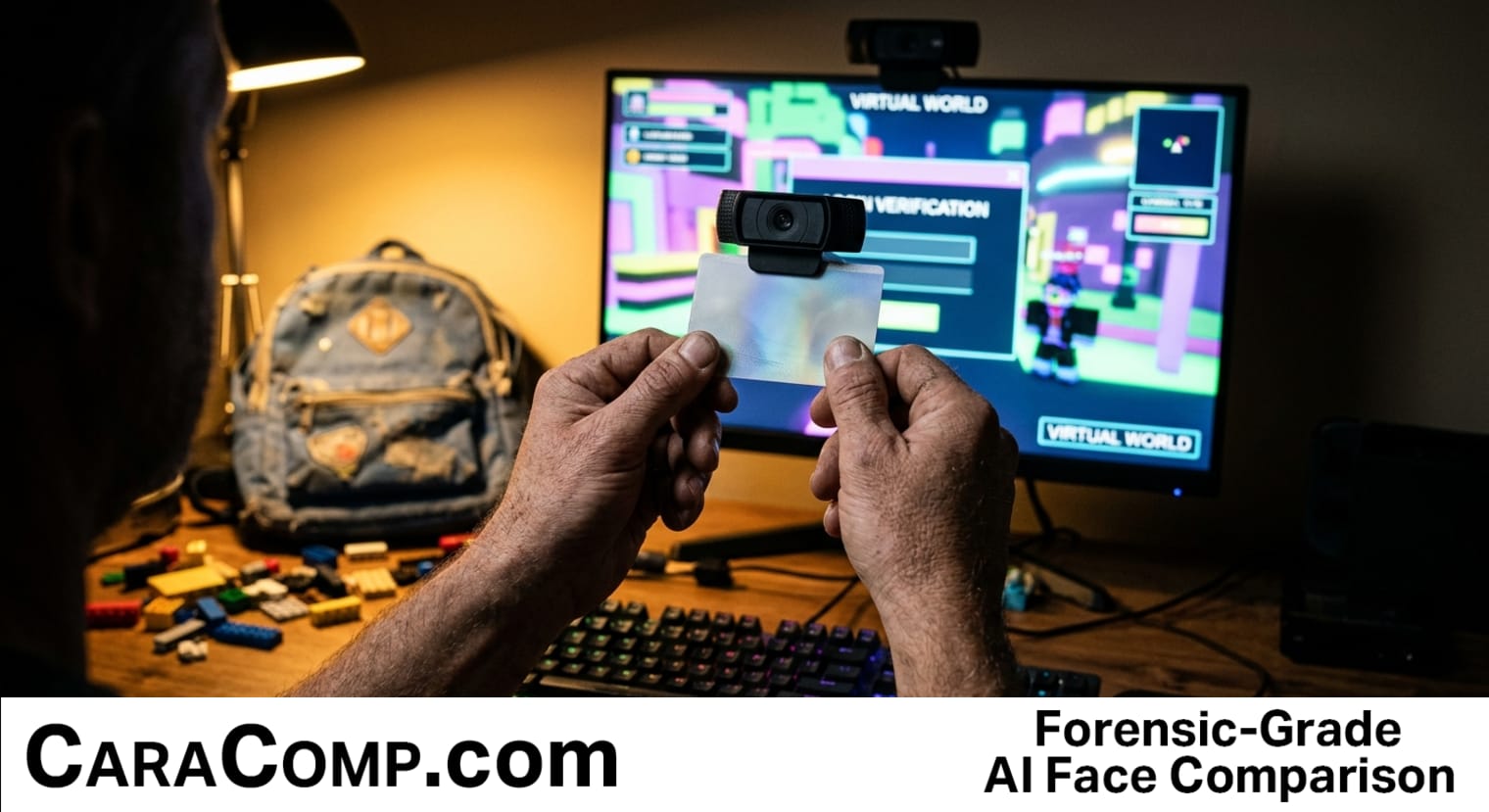
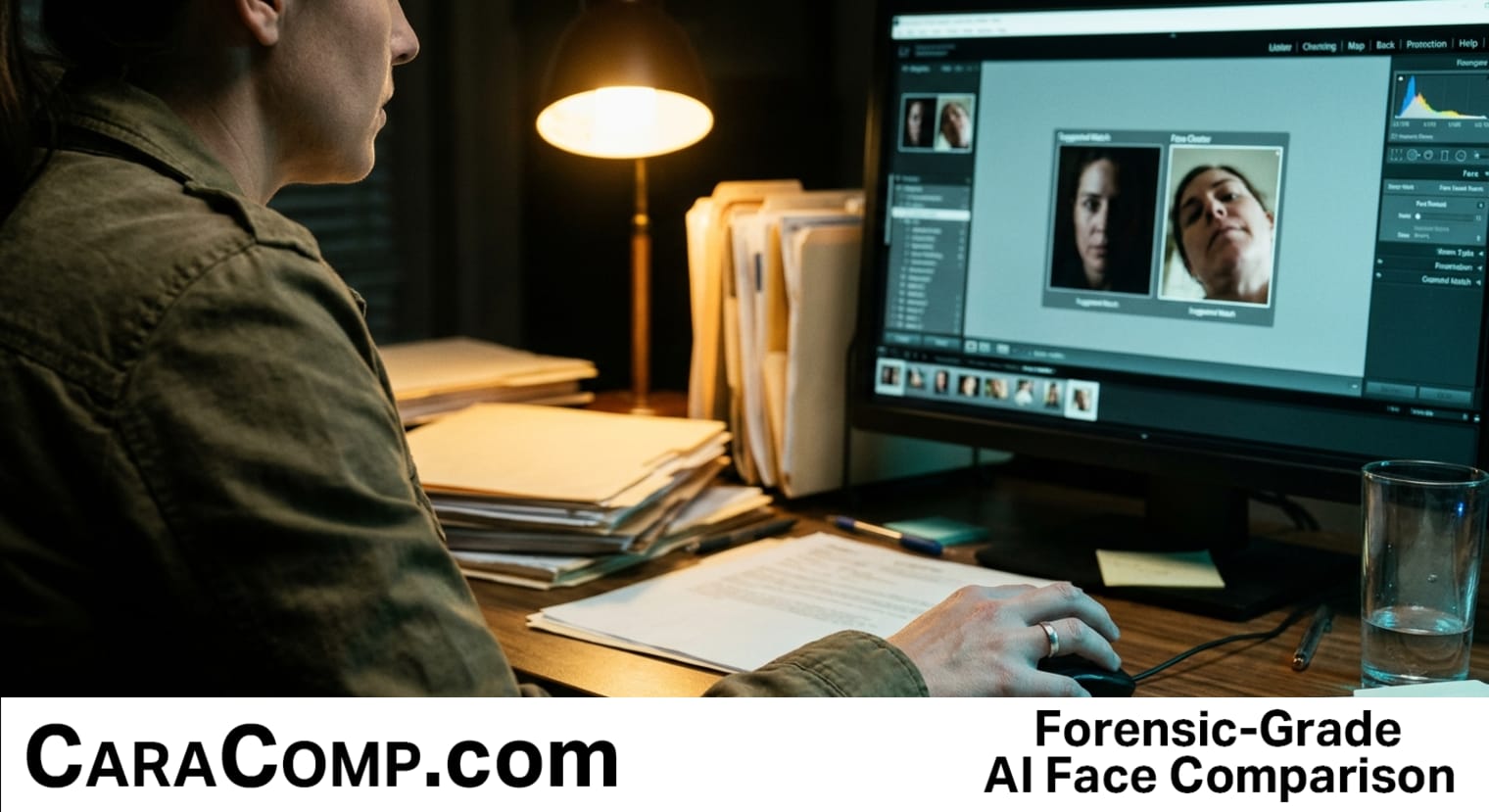
Deconstructing consumer face grouping vectors and biometric storage architectures reveals a critical divide between automated consumer categorization and rigorous, deterministic computer vision pipelines. When big-tech cloud platforms quietly process billions of unconstrained images into persistent mathematical face vectors, they expose the technical risks of automated clustering. For software engineers building computer vision pipelines and analysts conducting digital case analysis, the revelation that consumer clustering relies on opaque, variable-threshold embeddings underscores why forensic workflows require deterministic facial comparison rather than unverified consumer grouping.
Vector Embeddings and the Pitfalls of Unsupervised Clustering
Under the hood, platforms like Google Photos execute a standard multi-stage computer vision pipeline: localization via a face detection model, alignment based on spatial landmarks, and deep feature extraction that projects facial features into high-dimensional vector embeddings.
Similarity between two faces is calculated using distance metrics, typically cosine similarity or Euclidean distance analysis. If the vector distance falls below an internal hardcoded threshold, the system assigns the image to an existing cluster.
The core engineering breakdown occurs within that clustering boundary. Consumer platforms prioritize recall over precision to keep photo libraries neatly sorted for casual users. However, unsupervised clustering on low-resolution, occluded, or off-angle imagery degrades clustering fidelity rapidly. As demonstrated in benchmark testing by the National Institute of Standards and Technology, static similarity thresholds produce wide disparities across different demographics, sometimes scaling false matches by up to 100 times. When automated clustering operates as a black box without exposed distance metrics, developers and investigators are left with uncalibrated probabilities masquerading as verified identities.
Why Evidentiary Case Analysis Requires Deterministic Facial Comparison
In legal, investigative, and developer contexts, a loose cluster is a liability. There is a massive operational distinction between generalized image grouping and deliberate facial comparison:
- Opaque Clustering: Aggregates images in the background using hidden heuristics, creates persistent biometric databases, and offers zero transparency regarding confidence intervals or vector distance.
- Deterministic Facial Comparison: Evaluates specific, user-provided images side-by-side using exact Euclidean distance analysis. The developer or investigator inspects the mathematical variance directly across specific reference vectors, ensuring reproducible, court-ready reporting.
When software makes an automated guess, it produces a speculative hypothesis. In professional investigation technology, relying on unverified grouping can derail an inquiry or introduce serious bias. High-stakes verification demands calibrated mathematical metrics, transparent vector thresholds, and deliberate human-in-the-loop validation.
The Architectural Shift Toward Ephemeral Vector Processing
The regulatory fallout surrounding consumer biometric retention—highlighted by enforcement actions under statutes like the Biometric Information Privacy Act—is accelerating a major deployment shift. Storing persistent biometric templates across multi-tenant cloud storage creates long-term compliance debt and system-wide vulnerabilities.
Developers are increasingly shifting toward stateless, zero-retention architectures. Instead of maintaining perpetual embedding databases that silently associate every detected face across an entire library, modern case analysis tools compute vector embeddings in volatile memory, perform Euclidean distance analysis directly against source files, and immediately discard the derived vectors once the comparison report is generated.
As edge vision models become lighter and vector quantization improves, will future investigative platforms abandon cloud-hosted face embeddings entirely in favor of client-side, zero-knowledge mathematical comparison?
About the author
- CaraComp delivers immediate and precise facial similarity analysis powered by advanced AI algorithms.
Comments
Join the discussionNo comments yet. Be the first to comment.